
Whoa! I got hit with this thought the other day while tapping my coffee card and fumbling a seed phrase on my phone. Seriously? We carry tap-to-pay in our wallets, and yet we treat crypto like it’s some fragile heirloom locked in a cave. My instinct said: there’s a cleaner way — a tiny, contactless card that actually behaves like money in your pocket. Initially I thought hardware wallets had to be bulky devices with screens, but then I saw the simplicity of a smart-card approach and something felt off about my assumptions.
Here’s the thing. Contactless NFC smart-cards combine two familiar behaviors: physical possession and near-field elemental security. Short-range radio, no clickable apps, minimal UI. That sounds simple, and it’s powerful. On one hand, simplicity reduces attack surface. Though actually, wait—let me rephrase that: simplicity reduces common attack vectors but it doesn’t eliminate targeted attacks. So yeah, you still need layered security.
I’m biased, but I like physical tokens. They feel tangible. They force you to think about custody in a different way. Hmm… a tactile confidence that your private keys aren’t just floating in some cloud somewhere. But let’s not get romantic about it—there are trade-offs. I’ll walk through the practical bits: threat models, usability, NFC quirks, contactless payments potential, and a real-world pick for people who want a true smart-card option without becoming an engineer overnight.
Short note: somethin’ practical matters more than headline features. Security doesn’t live in a spec sheet; it lives in behavior. Wow!
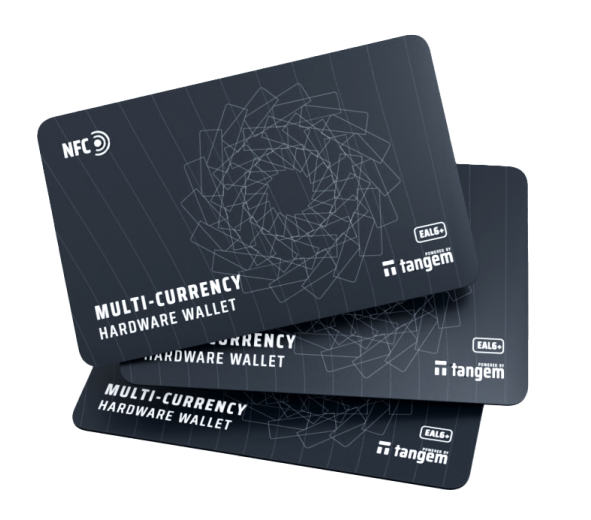
What problem are these cards actually solving?
At core, most people struggle with two things: secure key custody and day-to-day usability. Really? Yep. You can have a vault that’s bulletproof but unusable, and it becomes an afterthought. You can also have an easy solution that’s insecure, and then—well, that’s a different disaster. Medium-term, I realized the smartest path is to align the security model with human habits. That’s what a contactless card promises: familiar form factor, low friction, and hardware-based keys.
My first impression was nostalgic—like an old credit card but for crypto. Then I dug deeper. Initially I thought the lack of a screen was a dealbreaker, but then I noticed the workflow: sign on-device, verify on the host app, transaction approved only when the card is present. On one hand, no screen means less UI to spoof; on the other hand, you need secure host interaction protocols. That balance is critical.
Okay, so check this out—tapping a card into your phone’s NFC is faster than connecting a dongle and typing a PIN. It’s also more intuitive for non-technical folks. But faster doesn’t automatically mean safer. There’s a continuum of threats from skimming and relay attacks to social engineering and supply-chain compromises. The best practice is to map your threat model: what are you protecting, and from whom?
Here’s a quick mental model: think of the card as a safe deposit box key. If you lose the key, someone can open the box only if they can physically use it and satisfy the bank’s checks. The card equals the physical key; the app or wallet acts like the bank’s interface; additional passphrases or multi-sig are the bank officer’s verification. So multi-layered custody still matters—don’t throw all trust into one tiny laminate.
NFC and contactless payments: the tech that makes it feel natural
Contactless routines are ubiquitous in the US now. Tap to pay, tap to ride, tap to access. People trust the motion. My instinct said that the same human behavior could translate into crypto: tap your tangem wallet to sign a transaction, get haptic feedback on the phone, and go. Sound neat? It is. But there are caveats.
NFC is short-range, about 4 cm effective for most readers. That reduces remote attacks but not man-in-the-middle relay scenarios if an attacker has specialized gear. Realistically though, relay attacks are low probability for most users. For enterprise or high-value holders, additional layers (timelocks, multisig) are non-negotiable. I learned that the hard way after dismissing multisig as overkill for everyday use.
There’s a subtle UX security win here: people are less likely to accidentally approve transactions when the signing action requires a deliberate physical tap. You physically have to be present. That alone reduces many social-engineering tricks, because an attacker can’t simply ask your cloud key to sign something while you’re asleep. This is very very important—physical presence raises the bar dramatically.
On protocols: look for cards that implement strong attestation, stateful counters, and replay protection. If the device can cryptographically prove its provenance (and the wallet checks that attestation), many supply-chain attacks are mitigated. Initially I didn’t appreciate attestation; now I treat it like hygiene.
Threat models: who should consider a contactless card?
Short answer: anyone who wants a better balance of security and convenience than a paper backup or a mobile-only wallet can provide. Long answer: if you regularly make on-chain payments, hold medium-to-large amounts, or want a simple physical backup that behaves like money, it’s worth considering. On the flip side, if your priority is high-frequency trading or ultra-fast custodial operations, a card might feel slow.
On one hand, hobbyists and everyday users benefit most. On the other hand, institutions often require hardware with auditable screens and e-sign workflows—so they might not adopt cards alone. Actually, wait—some hybrids exist: cards for signing day-to-day transfers and multi-sig cold wallets for large holdings. That hybrid is where I’m leaning these days.
I’m not 100% sure about legal nuances in every jurisdiction, but in the US the regulatory chatter around custody and KYC is evolving. Holders should mind where keys are generated and whether the device’s attestation can be used in compliance processes. This part bugs me, because tech moves faster than policy, and that mismatch creates headaches.
Practical tips and FAQs
How secure is NFC against remote theft?
Short: low risk unless targeted. Long: NFC’s short range prevents casual remote theft, but determined attackers could attempt relay attacks with specialized equipment. Use additional protections like passphrases, and don’t store massive funds on a single, lone card.
What happens if I lose the card?
If you set up a recovery seed or backup (which you should), you can restore on another hardware wallet or multisig setup. I’m biased, but use redundant backups stored in separate secure locations. Also consider pairing cards with a secondary approval factor: a PIN or a host-based confirmation.
Is a contactless card compatible with my existing wallet apps?
Compatibility varies. Some apps natively support smart-card signing flows; others require middleware. Check vendor docs. For a hands-on choice that fits the ‘card’ model, I recommend investigating the tangem wallet for its card-first approach that blends ease with hardware security.
Okay, so here’s a practical scenario: you want something you can carry daily to pay or sign small transactions, but you don’t want your phone to have the private keys. The card sits in your wallet. When you need to approve a crypto payment, you tap it. The app requests a signature; the card signs and returns proof. No seed phrases fanned out on a desk. Less drama. Sounds simple. It mostly is—until supply-chain, firmware updates, and recovery plans enter the picture.
One more thing—update strategy. Devices that never get firmware updates are risky if new vulnerabilities are discovered. But updates can be exploited if not properly attested. So prefer vendors that provide cryptographic firmware signing and public disclosure of their update process. Transparency matters. I’m not shouting from a rooftop, but this part is quietly crucial.
Finally, a quick checklist for choosing a card: cryptographic attestation, secure element, counter-based replay protection, strong host validation in wallet apps, and a sensible recovery story. Also: real-world customer support. Tech is only as good as the team behind it when things go sideways.
To wrap this up (not with a formal send-off, because that feels robotic), I still prefer multi-layer custody for anything that matters. A contactless smart-card is an elegant, user-centric layer in that stack. It makes crypto feel less like a tangle of seed phrases and more like actual money—something you can carry and use without constant fear. I’m curious to see adoption grow, though I know it’s not a universal silver bullet. There’s more to test, more edge cases, and more policy questions. But for many folks, it’s a very practical step forward.
